
Open Call — 2026
Chicago Single Stair
Design Competition
Reimagine what's possible on Chicago's narrow lots. Design a single-stair residential building that fits the city's fabric while opening the door to more homes and small-scale infill development.
Overview
About the Competition
The housing crisis in Chicago is real, but so is our opportunity to innovate. Single-stair buildings offer a promising solution, enabling the construction of more homes without sacrificing the quality of life that makes our neighborhoods special. As policymakers consider new legislation, this competition will demonstrate what's possible through collaboration, creative design, and community-focused planning.
The typical Chicago lot leaves little room in its narrow dimensions for inefficiencies. For the last century, Chicago has applied some of the most strict stair and egress requirements anywhere. Even with vastly better building materials, we still dedicate more space to stairs than most municipalities do around the world. In effect, this pushes developers to combine lots that could have been infill — consolidation that can lock smaller developers out of the market and limit the variety of housing types available to residents.
On the contrary, single-stair designs — as demonstrated through recent design competitions, research, and implementation in cities like Baltimore, Austin, Seattle, and New York — allow for smaller, more efficient footprints that better fit Chicago's narrow lots, preserving opportunities for small-scale infill development while still meeting safety standards.
Eligibility
Who Can Enter
Anyone over 18 years of age is eligible to participate. All entries are reviewed anonymously — jury members will not know the identity of entrants until the winners are decided, as they will only see anonymous entries. Entrants who have business relationships with jury members or competition advisors must not discuss their entries with those individuals. Entrants affiliated with a sponsoring organization are eligible to enter; however, immediate family members of jury members' design firms are not eligible to enter.
Site & Program
Building Design Criteria
Find a real site in Chicago that matches one of the two lot configurations below. Infill development and land use are critical — be prepared to document why you selected your specific site.
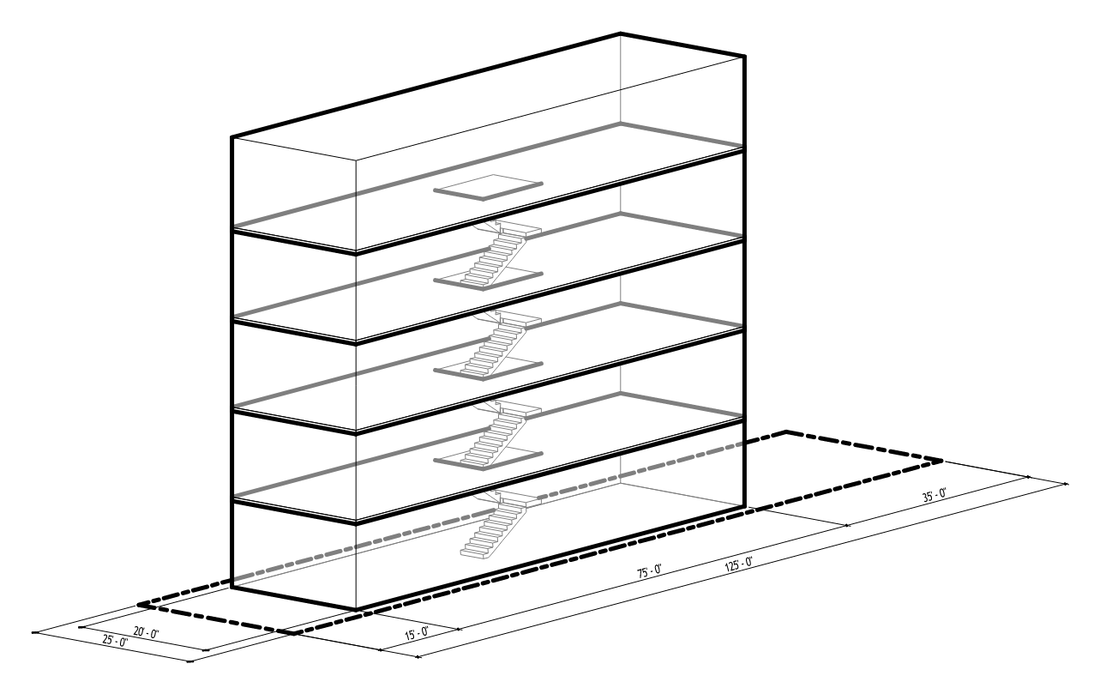
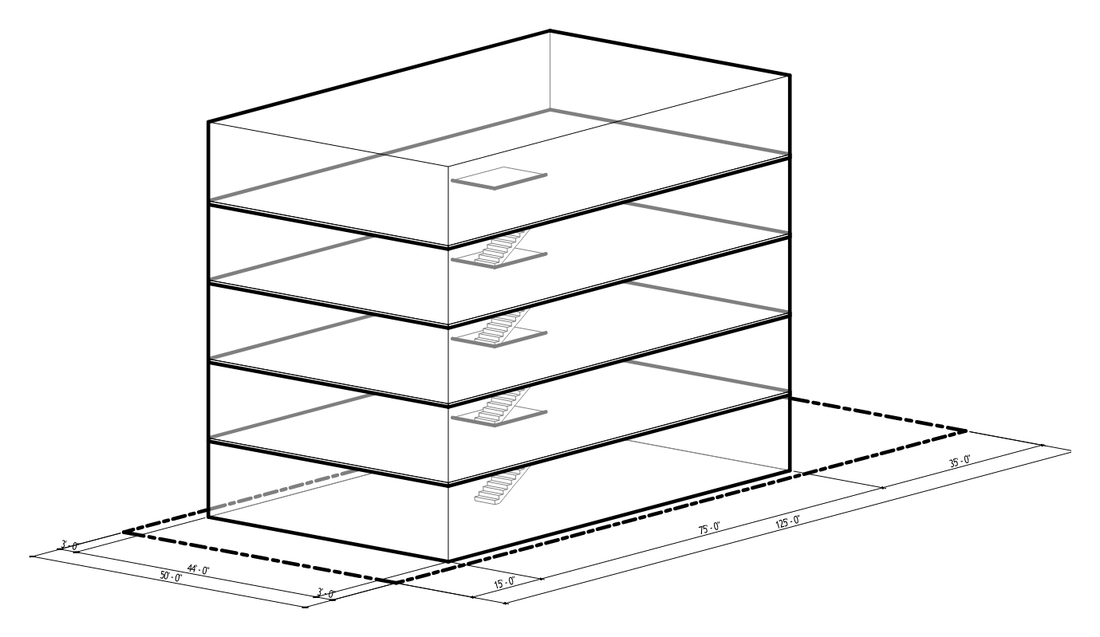
15 ft front yard setback
35 ft minimum rear setback*
Combined 5 ft side setbacks (min. 2 ft per side)
Flat site · Rear alley access
15 ft front yard setback
35 ft minimum rear setback*
3 ft minimum side setbacks
Flat site · Rear alley access
*Rear setback not applicable to a detached garage. Assume no car parking requirements and a 65 ft height limit for habitable spaces. Consider infill, site adjacency (school, grocery, library, parks), transit access, future place-making opportunities, and how your building can weave into the existing community.
Single Stair Requirements
Building Program
Primarily residential, but mixed-use is acceptable. A variety of residential unit types is encouraged — explore what's possible. Elevators may be employed (ASME A17 is a possible sizing guideline). At least 5% of units must be accessible. Assume no car parking requirements.
Deliverables
What to Submit
Arrange all drawing deliverables on a single 24″ × 36″ sheet, submitted as a PDF (300 dpi recommended). Include a name for the project. All plans must include a graphic scale and a north arrow. Do not include personal information on any deliverable.
Evaluation
Judging Criteria
Submissions will be evaluated by a multidisciplinary jury based on the following criteria, with an emphasis on design clarity, originality, and the potential of single-stair housing to shape Chicago’s neighborhoods.
Criteria
Awards
Prize Tiers
First, second, and third place winners — plus a student award — will be announced at a live, in-person reception in Chicago following jury selection. All submissions meeting minimum submission standards will be displayed throughout the evening. Attendance is free, tickets are available to the general public, and at least one member of each group must be present, remotely or in person.
Key Dates
Timeline
Jury
Jury Members
The jury will be made up of professional architects, urban planners, lawmakers, and developers from the Midwest region as well as national experts on small-scale development, all dedicated to upholding objectivity in their evaluations. Remaining jury member names and bios will be shared closer to the submission date.
Support
Sponsors & Partners
This competition is made possible by the generous support of the organizations below. Their backing funds the prizes, the awards reception, and the public programming that brings single-stair housing into the conversation about Chicago's future.